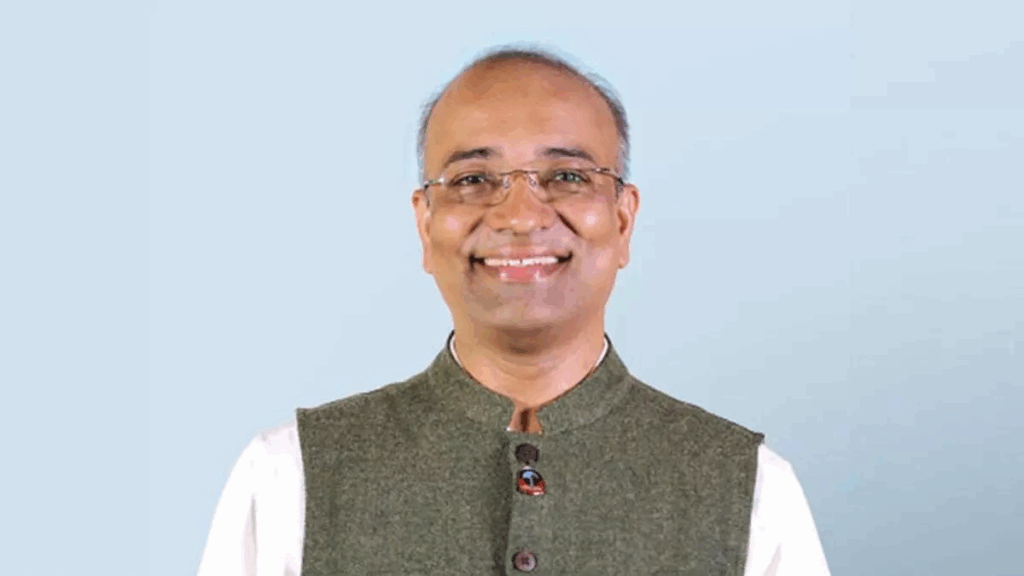
Samunnati Financial Intermediation and Services, a city-based agri-NBFC, has witnessed a hockey stick growth since its inception in 2014. Samunnati’s loan book has risen from Rs 3 cr to Rs 300 cr, with lending to the agrarian community in the range of Rs 4,500 to Rs 5 cr. The company aspires to breach the Rs 350 cr mark in March 2018.
Chennai: SG Anil Kumar, a career banker turned entrepreneur three years ago when he set up this outfit, which has received a funding of Rs 30 cr from Accel and other investors like Elevar Equity. As much as 60 per cent of its customer base comprises women and the B2B2C model caters to 1 million plus farmers across 111 districts in 12 states.
Exposure to rural banking (with Canara Bank, Bank of India), stints at ICICI and IFMR Trust (where he was the co-founder), spearheading Kshetriya Gramin Financial Services, a comprehensive understanding of the lending scenario and having worked with Nachiket Mor (National Director for Bill and Melinda Gates Foundation – India), since 2005, led to the gradual tilt to entrepreneurship.
Value chain segmentation
Kumar believes in the AMLA approach – (access to markets through financial intermediation, market linkages and advisory services) so that enterprises and value chains can operate efficiently. He says, “We have 12 value chains, such as fruits and veggies, maize, dairy, paddy seeds and input provisions. Dairy alone contributes 35 per cent of the value chain. We are on consolidation mode, collapsing certain segments, like moving maize – used as feedstock, under dairy itself.”
Raising the bar for lending
He gained exposure to the world of commodities, managerial and marketing functions and a mandate to set up 200 quality micro finance institutions under the Mor-steered IFMR Trust’s Kshetriya Gramin Financial Services (KGFS) programme. It was some of the ideas that were brewing at KGFS that the CEO-Director of Samunnati decided to pursue.
“Rural households were not operating in isolation. They were in an ecosystem, dependent on two or three major economic activities – agri or allied activities. If rural households have to be impacted positively through financial services, we need to raise the bar. That was the genesis of value chain financing of Samunnati.”
He points out that those in the lending business do not understand the vagaries of farming. “We realised the need to de-risk households, and customise crop loans and other farm-related products,” says Kumar, who believes this to be a profitable and sustainable model.
Risk assessment fallacies
Belying general perception that believes agriculture sector is risky, he says, despite all the risks involved (crop loans, rainfall failure, crop failure, farmer debt) the post-harvest, the production risk is mitigated. He explains, “Market and price risks can be hedged against. Samunnati does not ask farmers to provide collaterals for availing loans.
Agriculture is cyclical and those owning lands may not be engaged in hard-core farming activities such as tilling or sowing crops. The repayment has to match the needs and so, cannot be uniform. Agri finance is all about product design and our loans are spread over 4 days to five years,” says the CEO-Director.
Customer base
Samunnati’s clients work in agri and allied spaces. “Dairy became our first value chain and then we stumbled upon gherkins (pickled cucumber). We ventured into the feed segment – maize and soya. De-oiled soya cake and maize are essential ingredients for animal feed. If the animal feed is taken care of, then productivity increases and so also does the quality of the produce. If fodder and feed are taken care of, then household can add one more animal as lot of resources go into feeding an animal,” Kumar says.
He adds, “We are paperless and cashless and ride on Aadhaar and e-KYC. Our crop loan is on a card (Samunnati Pay), on which the limit gets loaded. The farmer can take it to the – Community Based Organisation or a cooperative, where he gets the inputs on a staggered basis without having to pay cash. Timely provisioning of inputs increases the yield by 50 per cent – a feedback we got from farmers in Madhya Pradesh.”